Being a micro-dairy means we must do this properly — there’s no room for thoughtlessness when you’re running a twenty-five-acre operation scaled down to two and a half. We don’t chase trends or assume anything; we use data, trials, and science to make progress. Every breeding decision here is grounded in milk records, linear appraisal data, disease testing, and observable temperament across generations.
Buying a dairy goat is only the beginning. We send you home with transition feed, a written care summary for that doe, and unlimited support. Whether you are a family with their first goats or an experienced breeder looking for the next puzzle piece for a breeding program, you’ll get our best information about the goats, educated breeding recommendations, and honest talk about strengths and weaknesses. Either way, you leave knowing what you bought and how to keep her thriving.
Healthy, comfortable does make better milk, raise stronger kids, and stay productive for years. Our goats are CMT-checked weekly, dewormed by fecal results rather than calendar, and housed with enough space, clean bedding, and airflow to keep mastitis and respiratory stress low. That daily attention shows up in their udders, their attitudes, and their longevity — qualities that matter whether you’re milking for your kitchen or showing in the ring.

We have a small group of bespoke crosses, as we work to develop the perfect home dairy goat. These are not random mixes, but carefully planned crosses of purebreds.

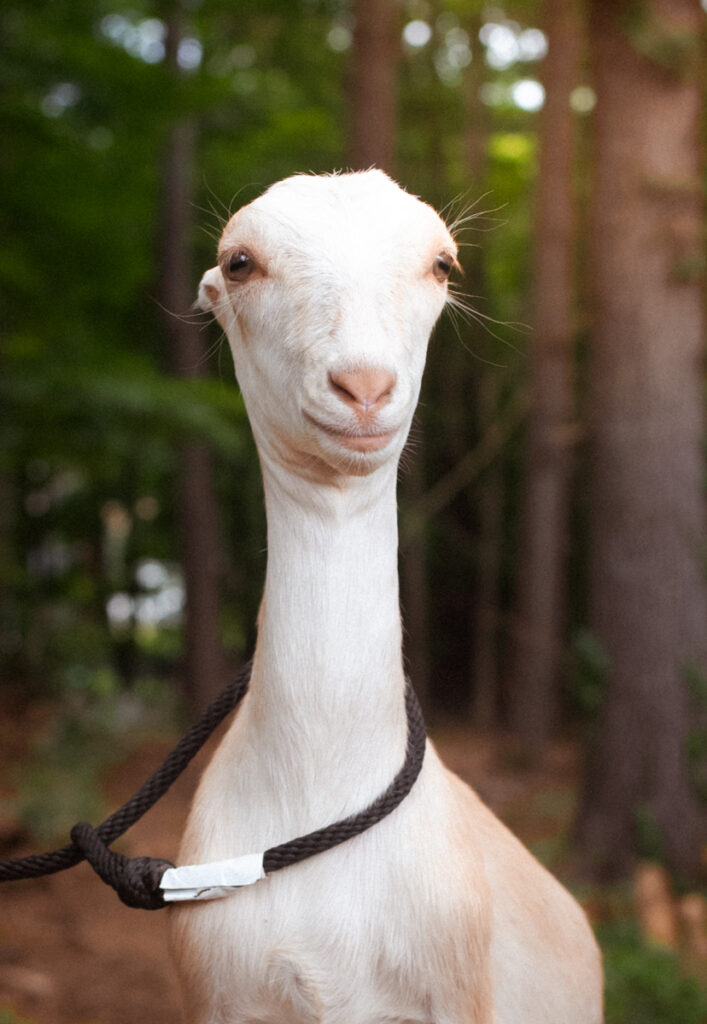
The Great Whites have become more rare as a family dairy goat breed, which we think is a great pity. Saanens are a treasure; they are by far the most productive breed, and their steady, calm temperaments are wonderful to live with.

If you hit the dairy section and walk right to the red-cap area - full fat milk, luscious yogurt, and velvety sour cream - the Nubian is for you. They excel in giving sweet, rich milk for butter, cheese, and ice cream. They are loud, funny, silly, and love to tell a joke.

These adorable little monsters have small ear flaps, which is their most visible difference, but for small family production they have a real superpower: small size, major milk production, and the ability to persist in lactating for several years without being re-bred.